Product Overview
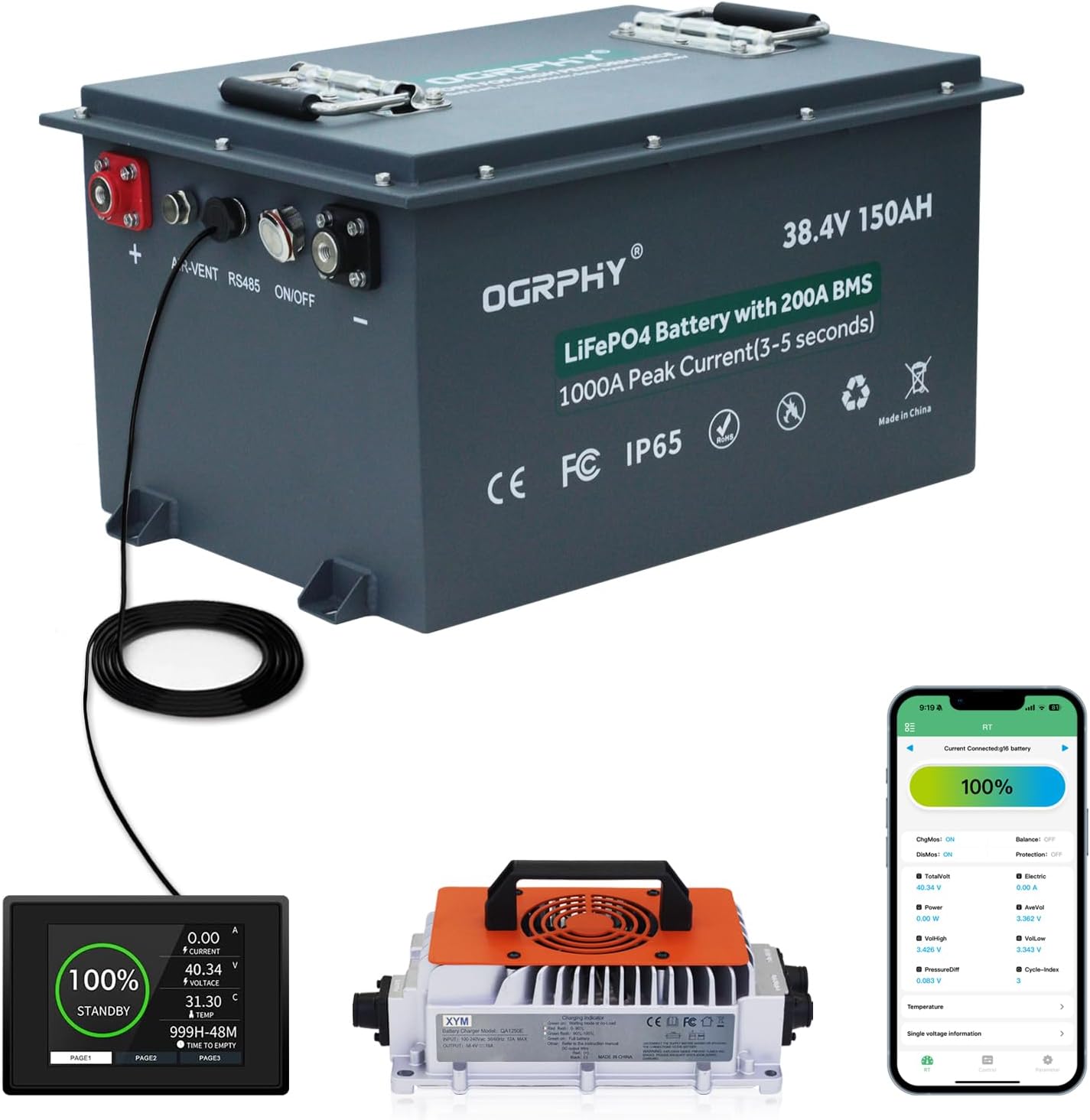
Lead-acid packs usually announce themselves at the worst moment — halfway round the back nine, with a full load and one more hill before the clubhouse. One lithium battery for golf cart use replaces the whole lead-acid bank. That routine takes the place of watering, equalising and guessing from a voltage needle. Three kinds of owner get the most from it. Course operators on long or hilly routes, where a 100Ah pack would mean a mid-shift charge. Estates, resorts, marinas and campuses where the same cart covers ground all day with passengers and gear aboard. And owners of older 36V carts who want the lead-acid set gone without touching the rest of the drive system. Most of the 36V golf cart batteries still in service are lead-acid sets that fade after a few hundred cycles; this pack is rated for more than ten times that count, with no watering, no terminal corrosion and no acid smell in the garage. The whole swap arrives together: the battery, its charger, the dash monitor with a mounting stand, and a retention strap.
Power Delivery & Protection
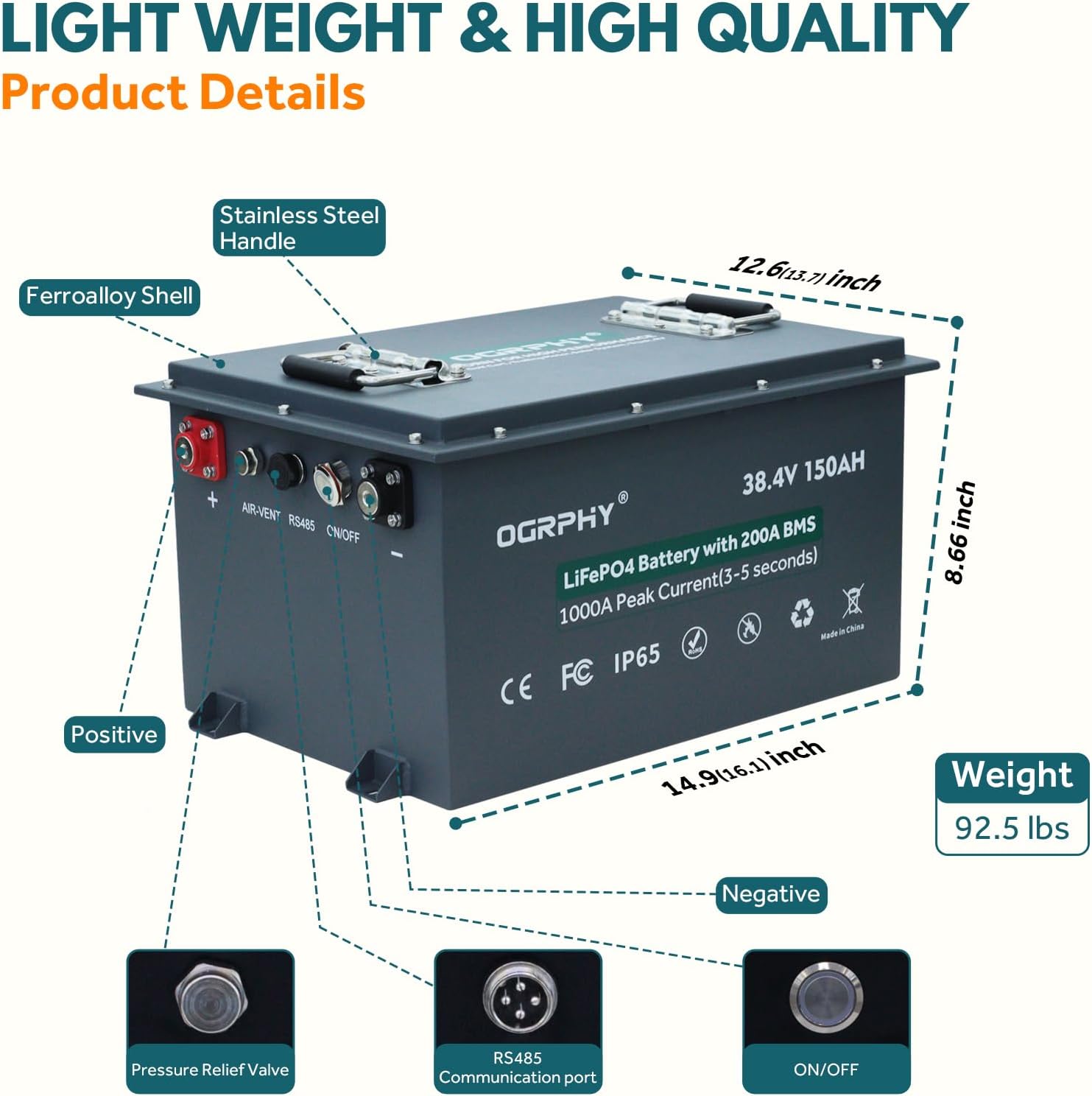
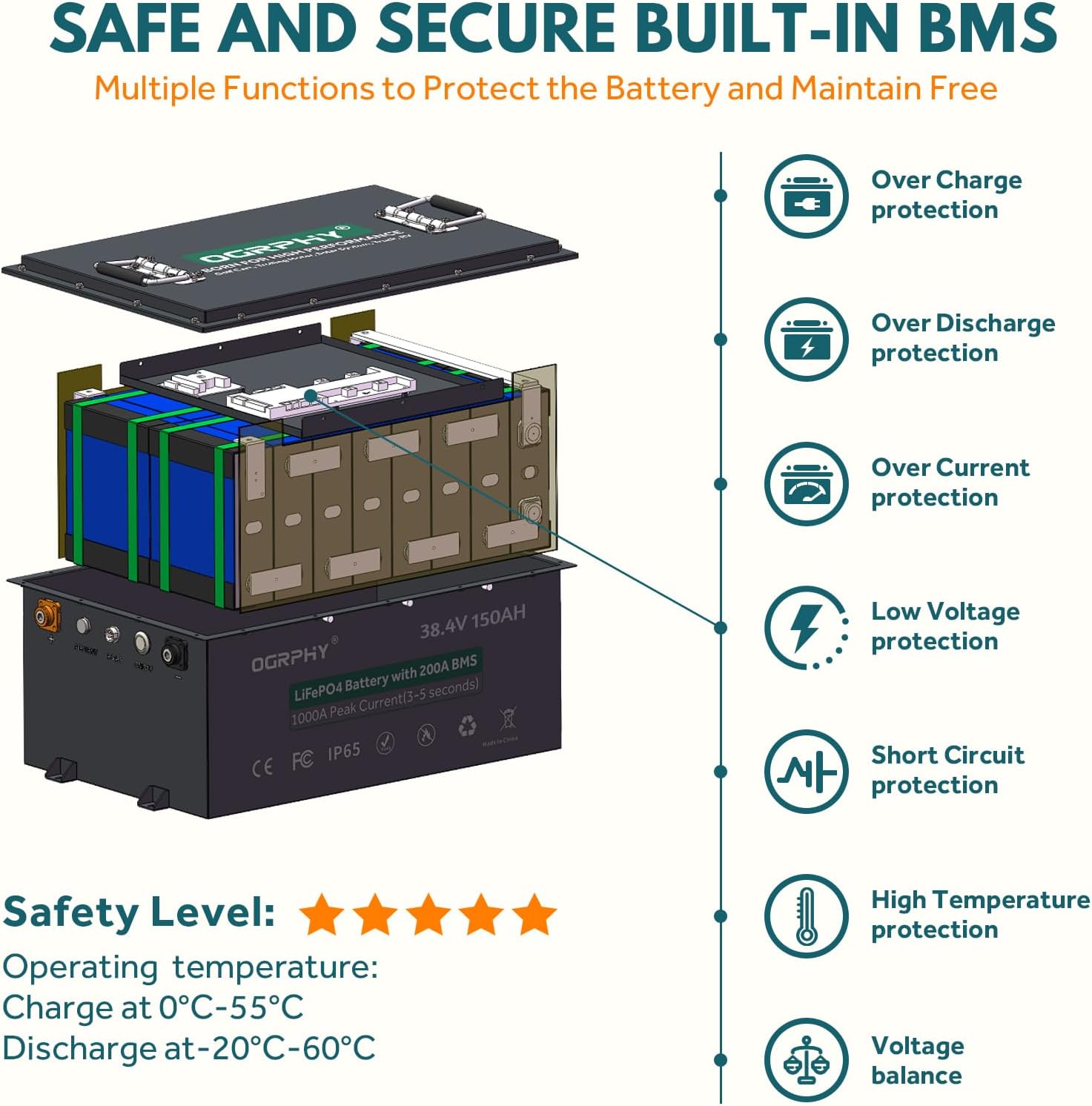
Most lithium packs that shut down on a hill are not short of energy — they are short of current. When a loaded cart pulls away on a slope, or climbs out of soft ground, the motor asks for a surge far above its cruising draw. A battery management system that cannot pass that surge cuts the pack off, and the cart stops dead with a full battery and a long walk back. The smart BMS inside this pack is built around that moment. It passes 200A continuously, which is what a loaded cart needs to hold speed on a long grade, and it allows a 1000A peak for three to five seconds — the window in which a motor gets moving. The steps below the peak matter just as much: 600A for 30 seconds and 300A for 32 seconds mean a sustained climb, a tow or a drag through sand will not trip protection either. Behind the BMS sit grade-A LiFePO4 cells rated for 2C discharge, so the ceiling comes from the electronics rather than from the cells themselves. That headroom is why a 36V lithium golf cart battery of this size can pull away on a slope the way the old lead-acid set did, without the voltage sag that dims the lights and drags the motor down. The case earns its place too. Front-mounted ports keep the cabling tidy.
Installation & First Charge
- Photograph the old pack and its wiring before anything is disconnected — terminal order, cable routing, and where the controller and charger leads land.
- Measure the tray: length, width and height with the seat down. Every lithium battery for golf cart use has to clear the same obstructions, so note the terminal spacing and how much slack the cables give you.
- Isolate and remove the lead-acid bank, negative terminal first, then lift the blocks out and check the tray for corrosion, rust or loose fixings.
- Lower the new lithium golf cart battery in using the carry handles, set it so the terminals line up with the existing cables, and secure it with the retention strap supplied.
- Reconnect positive and negative to the marked terminals and tighten them down. Check that the pack's on/off switch is off before the first connection, then read the manual that comes with the pack before charging.
- Fix the touch monitor to the dash with the stand provided, run the coiled cable to the communication port on the pack, and route it clear of the steering linkage and pedals.
- Charge fully before the first trip: connect the supplied golf cart battery charger, wait for the indicator to show a full pack, then let it rest before you drive.
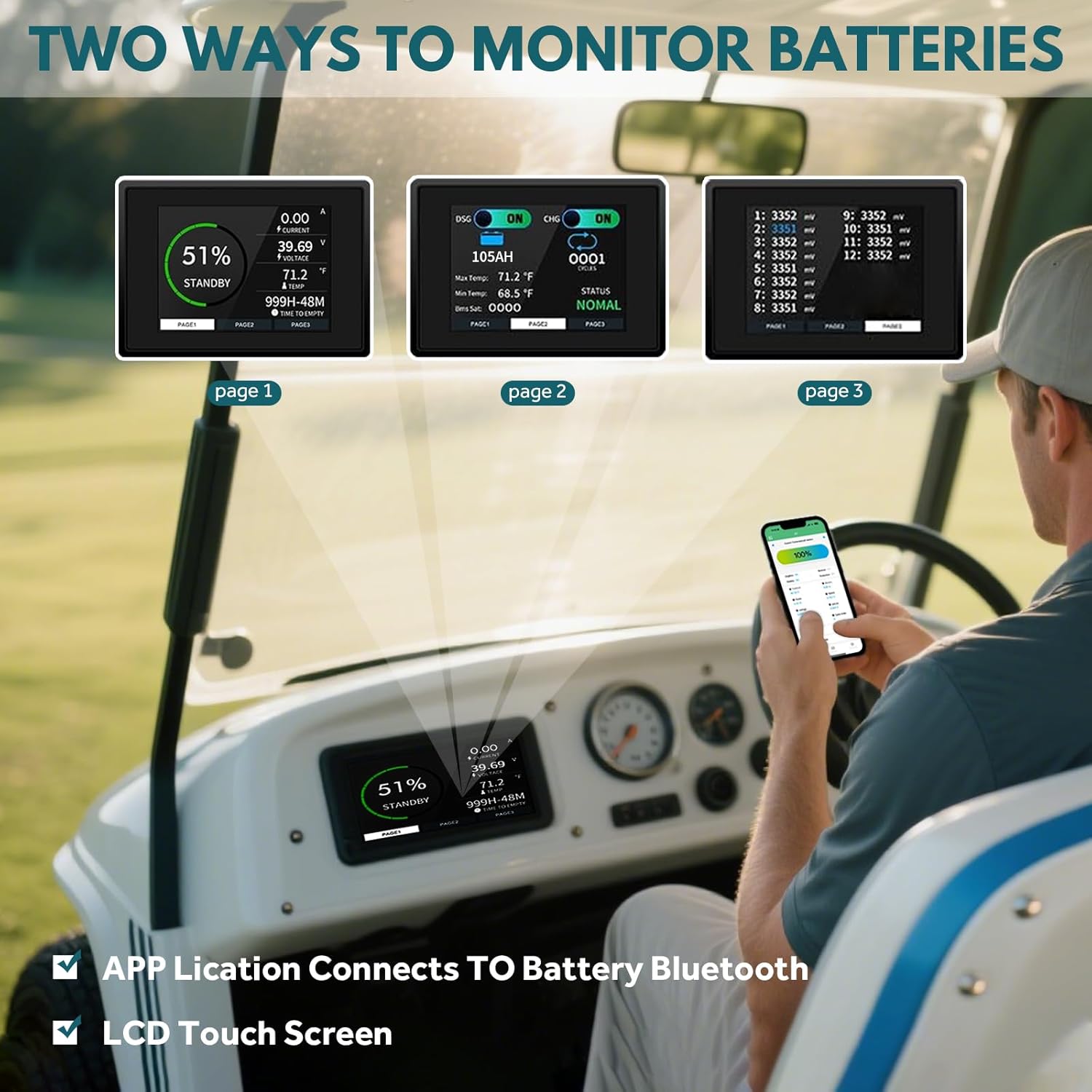
- Pair the phone app and note the first readings — pack voltage, cycle index and estimated time to empty — so you have a baseline to compare against in a month's time.
Range & Route Scenarios
- A full round with charge in hand. On test, a cart running a 3 kW motor covered 70 miles from one charge. An 18-hole course is a fraction of that distance, so the surplus is what carries you back to the barn, out again after lunch and across the car park at the end of the day.
- Shuttle duty on estates and resorts. Where a cart runs all day between clubhouse, villas, marina and maintenance yard, the pack is asked for dozens of short trips rather than one long one. 150Ah absorbs that pattern without a mid-afternoon top-up.
- Loaded utility carts. Tools, seed, coolers, a trailer or a second passenger all add rolling resistance, and the pack has to move it on every trip. This is the capacity tier for carts that are never empty.
- Hills, headwind and cold mornings. A long climb, a stiff breeze or a cold snap pulls energy out faster. On a frosty morning, shorten the route and put the cart back on charge indoors rather than leaving it out overnight.
- Tyres and right foot. Soft tyres, low pressure, a dragging brake or a driver who holds full throttle between shots will all cost miles; a well-maintained cart on correct pressures will always do better.
- What the 70 miles is, and is not. It is a test figure from a 3 kW motor — useful for comparing this pack with the smaller 36V lithium golf cart battery options in the range, and for judging whether your daily route sits comfortably inside it. Your own figure will move with load, terrain and temperature, so treat the number as headroom rather than a fixed promise for your course.
- Partial charges do no harm. This lithium LiFePO4 battery is a deep cycle pack built for repeated discharge and recharge, so plugging in after a short morning run is fine; you do not have to run the pack flat before charging it again.
36V Capacity Comparison
| Pack | What it suits |
| 36V 150Ah (this pack) | Long course loops, hilly ground, resort and estate shuttle duty, utility carts carrying tools or a full passenger load |
| 36V 105Ah | Standard 18-hole rounds on rolling courses where the cart returns to the clubhouse between rounds |
| 36V 102Ah | The same 18-hole day with lighter loads and a shorter drive home |
| 36V 100Ah | Short internal routes, a single nine and budget-led builds |
| Rest of the range | 36V lithium golf cart battery options from 100Ah up to 150Ah, so capacity can be matched to the route rather than to the price tag |
| 48V cart | A different platform entirely — a 36V pack is the wrong choice for a 48V controller |
Specifications
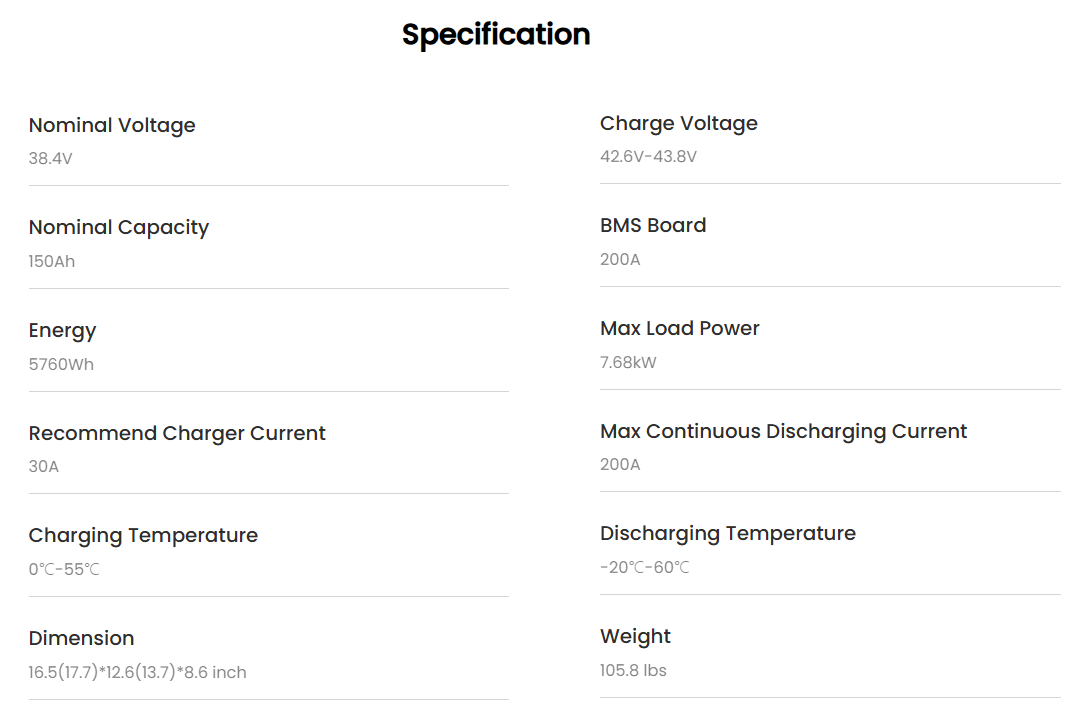
| System voltage | 36V |
| Nominal capacity | 150Ah |
| Energy capacity | 5.76 kWh |
| Chemistry | Lithium LiFePO4 battery, grade-A cells |
| Battery management | Smart 200A BMS with Bluetooth |
| Cycle life | 4000+ deep cycles at 80% depth of discharge |
| Case | Metal shell, fire-resistant, shock-resistant, IP65 rated |
| Charger | 36V 25A golf cart battery charger, included |
| Monitoring | Dash touch monitor with mounting stand, plus mobile app |
| Controller compatibility | Controllers used on major golf cart brands |
| Mounting | Retention strap included |
Monitoring & Charging
- A screen that stays in view. The kit includes a touch monitor and a mounting stand, so the readout sits on the dash rather than in a pocket. It pages through pack voltage, current draw, temperature, state of charge, time to empty and the cycle index. - A phone app for everything else. The same data reaches a phone over Bluetooth, including protection and balance status, so you can look in on the golf cart lithium battery while it is charging or from the far side of the yard. - Two views of one pack. Drivers tend to use the dash screen; whoever looks after the fleet tends to use the app. Both read the same pack, so there is no second sensor to fit or calibrate. - Cycle index, so you know where you stand. Because these are deep cycle batteries, the monitor keeps a running cycle count and the readings can be compared month to month as the pack ages. - Warning before the walk home. A falling state of charge, a temperature spike or a protection event shows up on screen while there is still time to turn back.
Maintenance & Care
| Task | What it involves | In place of |
| Cell watering | Nothing to do: the pack is sealed, with no caps to open and no level to check | Topping up every cell of a lead-acid bank with distilled water and testing each one every few weeks |
| Equalising charge | Nothing to schedule: the BMS balances the cells while the pack charges normally | The long deliberate overcharge a lead-acid set needs so its weakest cell catches up with the rest |
| Terminal check | Every six months, and again after a long idle spell: terminals clean, dry and tight, with the posts given a thin film of protection | Scraping white corrosion off the same posts and re-tightening them as the lead-acid set ages |
| Case and port care | A wipe with a damp cloth when the cart comes in dirty; keep grit and standing water out of the charge and communication ports | Washing dried acid off battery tops, neutralising spills and repainting the tray |
| Charging habit | Plug in at the end of the day's run, however short the run was, and use the 36V 25A charger supplied | Charging before every round and never leaving a lead-acid set sitting discharged |
| Winter and storage | Charge fully, switch the pack off, then top it up every couple of months and keep it out of hard frost | Draining, removing and rewatering a lead-acid bank for the winter, then hoping it wakes up in spring |
| Monitor review | Once a month, glance at the cycle index, temperature and any protection event on the dash screen or app | Nothing at all — a lead-acid cart gives you no record to look back on |
| Misuse to avoid | A lead-acid charger on a lithium golf cart battery, a pack left flat for months, a protection trip that keeps repeating, or a pressure washer aimed at the connectors | The same mistakes shorten a lead-acid bank too, but deep cycle batteries fail quietly rather than announcing it |
Ordering & Delivery
- Tell us the cart first: brand, model, system voltage and a photo of the battery bay. Our team checks the pack against it before the order is packed, which settles most fit questions before they become returns.
- Stock packs ship from local warehouses in the US, EU and UK, with delivery normally in 3-7 days. Every lithium LiFePO4 battery is checked before dispatch.
- Custom builds, fleet quantities and non-stock configurations take longer — allow around 35 days for production before dispatch.
- Every golf cart lithium battery we ship carries a 5-year warranty. If a quality problem does appear, contact us first: we arrange the return and the next step with you rather than leaving you to move a heavy pack on your own.
- Support answers product, fit and installation questions within 24 hours, so a Friday afternoon question does not cost you the weekend.
About Our Company
Xinyubattery is the brand of Shenzhenshi Xinyu Newenergy Technology Co.,LTD, a Shenzhen-based company founded in 2016 and working in green power solutions for more than ten years. Through a vetted network of production partners, we bring a broad range of power products together in one place and consolidate each order for you. Products are checked before dispatch, packed for export and shipped from local stock, and our team stays available for technical advice, fitting questions and after-sales help.
FAQ
Will it work with the controller and charger already on my cart?
The pack is built for 36V carts and matches the controllers used on the major cart brands, so in most swaps the controller, solenoid and wiring stay exactly as they are. The charger is the part that changes: use the 36V 25A golf cart battery charger supplied in the box, because a lead-acid charger runs a different charge profile. If you run a fleet and want to keep a particular charger, send us its output specification and we will tell you whether it suits this lithium golf cart battery before you order.
How far will one charge actually take me?
On test, a cart with a 3 kW motor covered 70 miles from a full charge. Real routes move that figure: passengers, tools, hills, soft ground, headwind and cold weather all draw more, while a light cart on flat ground will do better. If your current lead-acid set only just finishes the round, this golf cart lithium battery leaves a comfortable margin; if you run a long shuttle route, use the number to plan the day with a reserve rather than running to empty.
Can I use it for anything other than a golf cart?
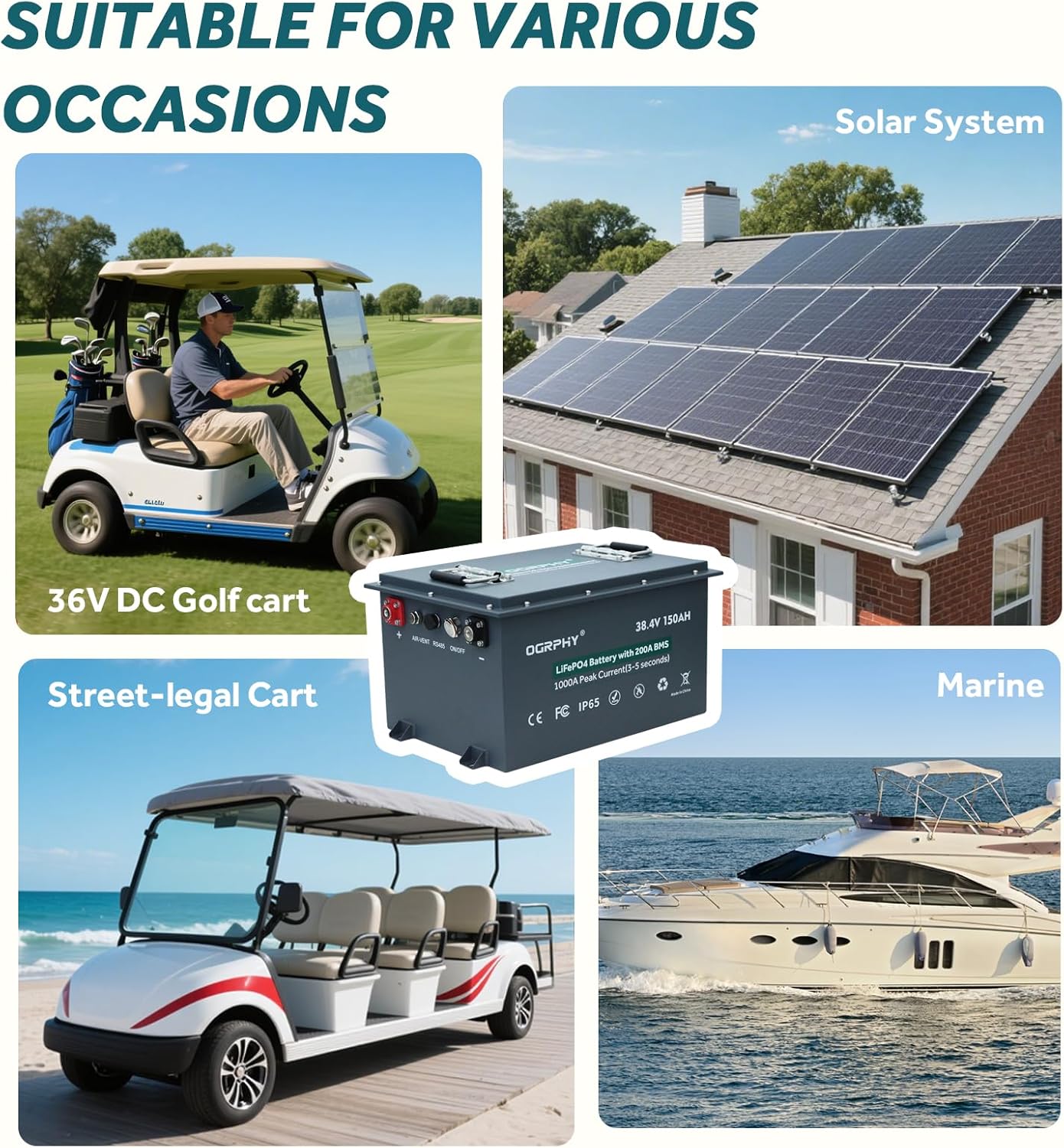
Yes, provided the voltage and the current match. The pack suits 36V utility vehicles, estate and works buggies and 36V trolling setups as well as carts. What matters is the continuous current the equipment pulls — send us the motor rating and we will confirm whether 200A continuous covers it. That is the same check we would make for any lithium battery for golf cart or utility-vehicle use.
What maintenance does the pack need?
Less than the lead-acid set it replaces. There is no water to top up, no acid and no equalising charge. Keep the terminals clean and tight, keep the case dry and give it a top-up charge if the cart stands for a long spell. Because these are deep cycle batteries, charging after a short run does no harm — you never have to run them flat before recharging.
What should I check in the battery bay before ordering?
Three things: the length, width and height of the tray the old pack sits in; which way the terminals face and how much slack the cables have; and the voltage printed on the cart's controller or motor plate. Photograph the old pack and its wiring before you disconnect anything. Send those details with your cart model and we will compare them against the pack — a five-minute check now is easier than returning a battery later.
What do the lights on the charger mean?
Red means the charger has power. Green means it is charging. Orange means the pack is full and the charger has moved to its finish stage. If the light stays red with the pack connected, check the mains socket and the charger plug first, then get in touch and we will work through it with you.